Mazeltov.cz explains; it does not rule. Kashrut practice varies by community, movement and family. For a specific situation, ask the rabbi of your community. The texts in this section are editorial drafts awaiting expert review.
Kosher wine
Wine has a special place in kashrut because in the ancient world it was used for libations to idols. Wine poured out in idol worship, יֵין נֶסֶךְ (yayin nesekh), is forbidden not only for drinking but for any benefit. The rabbis added a prohibition on the ordinary wine of non-Jews, סְתָם יֵינָם (stam yeinam), partly so that drinking together would not lead to social closeness and intermarriage.1,2,3
Kosher wine is therefore produced under supervision from crushing to bottling, and in Orthodox practice it is handled only by Jews who observe Shabbat. The raw materials themselves (grapes, yeast) are usually unproblematic; what matters is who handles the wine, as well as fining agents and additives, which must also be kosher. The same applies to grape juice and grape products such as wine vinegar or brandy.
Wine labelled מְבֻשָּׁל (mevushal, "cooked") has been heated. According to the Shulchan Arukh, the prohibition of stam yeinam does not apply to cooked wine, so an opened bottle may then be poured even by a non-Jewish waiter; this is why mevushal wine is common in kosher restaurants and catering. Whether modern flash pasteurization counts as "cooking" in the halakhic sense is assessed differently by rabbinic authorities.4
For wine from Israel, supervision also verifies agricultural laws tied to the Land of Israel: the separation of tithes (terumot u-ma’asrot), the prohibition on the fruit of young vines (orlah) and the rules of the sabbatical year (shemitah).
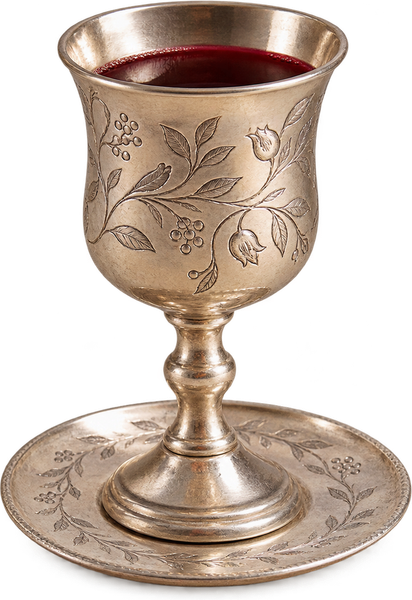
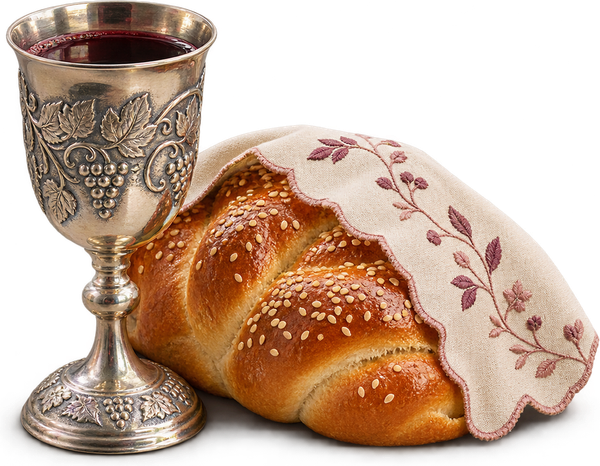
Wine and grape juice are used for kiddush and other blessings, for example on Shabbat and festivals. Anyone buying wine for guests who keep kashrut usually chooses a bottle with a hechsher (see Certification and Hechsher).
Bread: pat akum and pat Yisrael
The Mishnah lists the bread of non-Jews among foods that may not be eaten but from which benefit is permitted. Such bread is called פַּת עַכּוּ״ם (pat akum); bread baked with a Jew’s participation is פַּת יִשְׂרָאֵל (pat Yisrael). The prohibition is rabbinic, and the Talmud likewise links it to concern about social closeness, not to the ingredients being forbidden.5,6,7
Halakhah distinguishes bread baked by a private person for their own use from bread made by a professional baker, פַּת פַּלְטֵר (pat palter). The Shulchan Arukh permits baker’s bread under certain conditions, especially where no Jewish baker is available; the Rema, whose glosses reflect Ashkenazi practice, is more lenient still. In many Ashkenazi communities, baker’s bread made with kosher ingredients was therefore traditionally eaten.8
Bread becomes pat Yisrael even if a Jew takes only a symbolic part in the baking, for example by lighting the oven or adding wood to the fire. Supervised kosher bakeries handle this by having the mashgiach light the oven.9
Many who eat pat palter during the year restrict themselves to pat Yisrael during the Ten Days of Repentance between Rosh Hashanah and Yom Kippur. In parts of the Orthodox world, especially Haredi circles, pat Yisrael is kept all year round.10
According to halakhah, bread should be parve: dairy or meat bread should not be baked, lest it be eaten by mistake with the other kind of food, except in a small quantity or in a distinctive shape by which it can be recognized (see Parve and Fish and Meat and Milk).11
Cooking: bishul akum and bishul Yisrael
Similarly, a rabbinic prohibition applies to certain dishes cooked by a non-Jew, בִּשּׁוּל עַכּוּ״ם (bishul akum), even when all the ingredients are kosher. According to the Talmud it covers only foods that are not eaten raw and that are "fit for a king’s table", that is, dishes served to guests; it does not apply, for example, to foods commonly eaten raw as well.5,12,13
Food is bishul Yisrael if a Jew takes part in the cooking. According to the Rema (Ashkenazi practice), it is enough for a Jew to light the fire or stove on which the food is cooked; according to the Shulchan Arukh (Sephardi practice), the Jew should place the food on the fire himself or otherwise be directly involved in the cooking.14
In practice this mainly concerns kosher restaurants and canteens where the cooks are not Jewish: there the mashgiach lights the stoves and ovens in the morning. Whether and how the rule applies to industrially produced foods is assessed differently by certifiers.
Milk: chalav akum and chalav Yisrael
The Mishnah forbids milk that a non-Jew milked without a Jew present. The reason is concern that milk from a non-kosher animal might have been mixed in. Milk from milking under Jewish supervision is called חֲלַב יִשְׂרָאֵל (chalav Yisrael).5,15
In the 20th century, Rabbi Moshe Feinstein in the USA popularized the view that where government regulation reliably rules out admixture of other milk, this oversight may be regarded as sufficient "seeing". On this basis many Orthodox Jews and most Conservative Jews consume ordinary milk (so-called chalav stam), while Haredi communities and some others insist on chalav Yisrael.
Special rules apply to cheese: hard cheese made by a non-Jew (gevinat akum) is forbidden even when the milk is in order, and according to the Shulchan Arukh even when kosher rennet is used. Orthodox certification therefore requires supervision during the cheesemaking itself.16
Separating challah
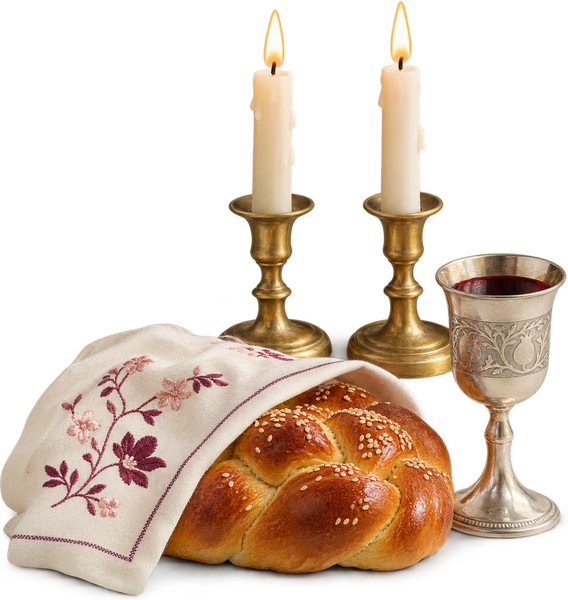
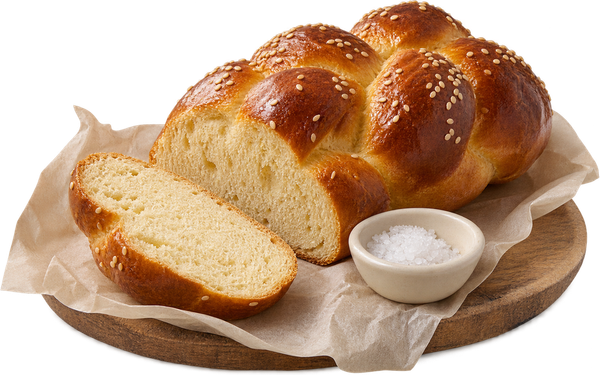
The Torah commands that a portion of the dough, the "first of your dough", be set aside for the priest. This commandment, הַפְרָשַׁת חַלָּה (hafrashat challah), also gave its name to the festive bread challah.17
Today, without the Temple and without ritual purity, the separated portion is not given to a priest: a small piece of dough is separated and usually burned or wrapped and discarded. The obligation applies to dough made from the five grains (wheat, barley, spelt, oats, rye) above a certain quantity of flour; above a larger quantity a blessing is recited. The exact thresholds are given differently in contemporary guides.18
The obligation falls on the owner of the dough, so bakers fulfil it as well; in supervised kosher bakeries the operator or the mashgiach takes care of it. If challah was not separated, in the Diaspora it can also be separated from the finished baked goods.
Separating challah is traditionally associated with women as one of the three commandments that tradition entrusts to the woman of the household (alongside lighting the Shabbat candles and the laws of family purity). Group challah baking with the separation of challah is a popular community event today.19
Differing approaches of the movements
Orthodox Judaism regards all the laws described here as binding, but differs on where it accepts leniencies (pat palter, government oversight of milk, the Ashkenazi lighting of the fire). Haredi communities usually choose the stricter option all year round.
The Conservative (Masorti) movement treats kashrut as binding, but has accepted leniencies for the laws introduced to keep Jews apart from non-Jews: in the USA, in one of its responsa, it permitted wine made by non-Jews, and it commonly accepts bread with kosher ingredients and milk under government oversight.
Reform Judaism understands kashrut as a personal choice; the laws on wine, bread and cooking by non-Jews usually play no role in it. Secular Jews generally do not follow them.
FAQ
Can I use ordinary supermarket wine for Shabbat kiddush?
In Orthodox and Conservative practice, kiddush is made over kosher wine or kosher grape juice with a hechsher. Reform and secular Jews often do not concern themselves with this. If you are preparing kiddush for guests who keep kashrut, choose a certified bottle.
Why do kosher restaurants often serve "mevushal" wine?
Because according to the Shulchan Arukh the prohibition on non-Jews’ wine does not apply to cooked wine. An opened bottle can then be poured by non-Jewish staff without the wine becoming unfit for Orthodox guests.⁂ To verify
Is bread from an ordinary bakery kosher if it contains only flour, water, yeast and salt?
Not necessarily. Additives (fats, emulsifiers), machines and baking trays that may come into contact with non-kosher or dairy products, and the question of pat akum all matter. Ashkenazi practice traditionally allows a leniency for baker’s bread (pat palter), but many Orthodox Jews buy only bread with a hechsher or pat Yisrael.⁂ To verify
Do I have to separate challah when I bake challah at home for Shabbat?
According to halakhah it depends on the amount of flour from the five grains: a small dough creates no obligation, a larger one requires separating challah, and above a higher threshold with a blessing. The exact thresholds vary between guides, so it is best to ask your community’s rabbi.⁂ To verify
Sources
Primary sources
- 1Mishnah Avodah Zarah, 2:3 text ↗
- 2Babylonian Talmud, Avodah Zarah, 36b text ↗
- 3Shulchan Arukh, Yoreh De’ah, 123 text ↗
- 4Shulchan Arukh, Yoreh De’ah, 123:3 text ↗
- 5Mishnah Avodah Zarah, 2:6 text ↗
- 6Babylonian Talmud, Avodah Zarah, 35b text ↗
- 7Shulchan Arukh, Yoreh De’ah, 112:1 text ↗
- 8Shulchan Arukh, Yoreh De’ah, 112:2 text ↗
- 9Shulchan Arukh, Yoreh De’ah, 112:9 text ↗
- 10Shulchan Arukh, Orach Chayim, 603:1 text ↗
- 11Shulchan Arukh, Yoreh De’ah, 97:1 text ↗
- 12Babylonian Talmud, Avodah Zarah, 38a text ↗
- 13Shulchan Arukh, Yoreh De’ah, 113:1 text ↗
- 14Shulchan Arukh, Yoreh De’ah, 113:7 text ↗
- 15Shulchan Arukh, Yoreh De’ah, 115:1 text ↗
- 16Shulchan Arukh, Yoreh De’ah, 115:2 text ↗
- 17Numbers, 15:17–21 text ↗
- 18Shulchan Arukh, Yoreh De’ah, 322 text ↗
- 19Mishnah Shabbat, 2:6 text ↗
- 20Babylonian Talmud, Avodah Zarah
- 21Shulchan Arukh, Yoreh De’ah, 112–138 text ↗