Minor holidays
Hanukkahחֲנֻכָּה
8 days · 25 Kislev – 2 (3) Tevet
- History
- Halakhah
- Minhag
- Folk custom
- Modern practice
- Interpretation
- Transliteration
- Hanukkah / Chanukah
- Pronunciation
- cha-nu-KA
- Duration
- 8 days
In 60 seconds
Hanukkah (Hebrew for “dedication”) lasts eight days from 25 Kislev, usually in December. It commemorates the Maccabean revolt against Seleucid rule and the rededication of the Jerusalem Temple in 164 BCE. The Babylonian Talmud adds the story of a single cruse of pure oil that burned for eight days. Each evening the hanukkiah is lit, an eight-branched lamp with an auxiliary candle called the shamash, and the number of lights gradually grows from one to eight. The lights are placed so they can be seen from outside: this is a public “proclamation of the miracle”. Al ha-Nissim is inserted into the prayers and Hallel is recited. People eat foods fried in oil (latkes, sufganiyot) and children play with a spinning top, the sevivon. Hanukkah is not a biblical festival and work is not suspended during it.
This year
Open the guideRelated recipes
When
Begins
Friday, 4 December 2026, at sunset (16:01)
candle lighting: 15:43
Ends
Saturday, 12 December 2026, after nightfall (16:55)
8 days
Begins
Friday, 24 December 2027, at sunset (16:03)
candle lighting: 15:45
Ends
Saturday, 1 January 2028, after nightfall (17:06)
8 days
Begins
Tuesday, 12 December 2028, at sunset (15:59)
Ends
Wednesday, 20 December 2028, after nightfall (16:58)
8 days
Times for Prague · Diaspora
History and origins
The historical core of Hanukkah is the Maccabean revolt (from 167 BCE) against the Seleucid king Antiochus IV Epiphanes, who banned certain Jewish religious practices in Judea and desecrated the Temple. The revolt was led by the priest Mattathias of the Hasmonean family and after him by his son Judah the Maccabee.1
According to 1 Maccabees the Temple was purified and the altar rededicated on 25 Kislev (164 BCE), and the celebration lasted eight days; Judah and his brothers decreed that it should be celebrated every year. 2 Maccabees describes an eight-day celebration “in the manner of Tabernacles” (Sukkot), which they had previously been unable to celebrate. Neither book mentions the miracle of the oil.2,3
Neither book of Maccabees is part of the Hebrew canon; they were preserved in the Greek tradition. Josephus knows the festival and calls it “Lights”.4
The Babylonian Talmud (Shabbat 21b) asks “What is Hanukkah?” and answers with a story: when the Hasmoneans prevailed, they found in the Temple a single cruse of pure oil bearing the high priest's seal, enough for one day, yet it burned for eight days. The following year these days were established as a festival of praise and thanksgiving. This is a rabbinic narrative written down centuries after the events, not a historical report in the modern sense.5,6
Religious meaning
The name חֲנֻכָּה means “dedication” and refers to the rededication of the Temple. The festival joins two motifs: the military victory of a small group and the spiritual renewal of the Temple service.
Rabbinic tradition emphasizes the miracle of light rather than the war. The purpose of the lighting is pirsum ha-nes, publicizing the miracle; that is why the lights are placed by the door or in the window.5
In modern times Hanukkah is interpreted in various ways: in the Zionist tradition as a festival of national courage, in the diaspora often as a festival of religious freedom and identity. Its popularity in the diaspora is also linked to its proximity to Christmas.
Core traditions
The Talmud lists three levels of observance: the basic obligation is one light per household per night; the “meticulous” (mehadrin) light one for each member; the “most meticulous” vary the number of lights according to the day. The School of Hillel, whose view is followed, increases the number of lights from one to eight.5
According to the Shulchan Arukh, in Sephardi practice one hanukkiah is lit for the whole household; according to the Rema's gloss, the Ashkenazi custom is for each member of the household to light their own.7
Widespread customs include games with the sevivon (spinning top), gifts or small coins for children (Hanukkah gelt) and public lightings of large hanukkiot in town squares, organized since the 1970s mainly by the Chabad movement.
How it is observed
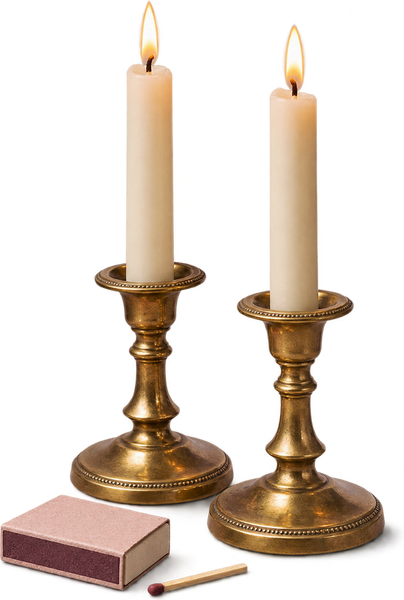
The lights are kindled every evening, according to most authorities after sunset or at nightfall; they should burn for at least about half an hour after dark. On Friday the hanukkiah is lit before the Shabbat candles, and on Saturday evening only after Shabbat has ended.8
The lights are meant “for looking at”, not for use: they may not be used as light for reading or work. That is why a shamash is added, an auxiliary light from which the others are lit.9
During Hanukkah Al ha-Nissim (“For the miracles”) is inserted into the Amidah and into the grace after meals, the full Hallel is recited every morning, and in the synagogue the Torah passage on the offerings of the tribal princes (Numbers 7) is read. Work is not suspended; in some communities women refrain from work while the lights are burning.10,11,12
Prayers and blessings
Two blessings are said before lighting: “…who has sanctified us with His commandments and commanded us to kindle the Hanukkah light” and “…who performed miracles for our ancestors in those days at this season”. On the first evening Shehecheyanu is added. The Talmud gives the wording “to kindle the Hanukkah light” (Sephardi nusach: ner shel Hanukkah).13,14
After lighting, Ha-nerot halalu (“These lights”) is sung, and in Ashkenazi communities the song Maoz Tzur (“Rock of my salvation”), a medieval poem signed in an acrostic with the name Mordechai.10
Symbols and objects
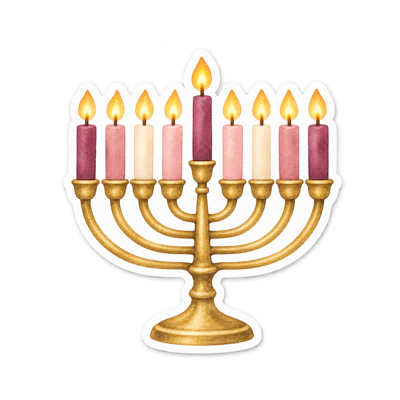
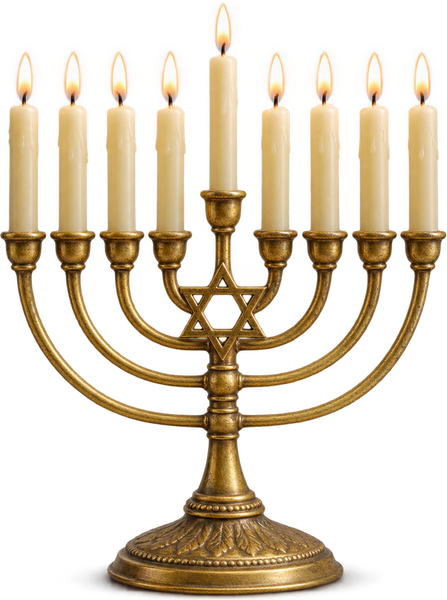
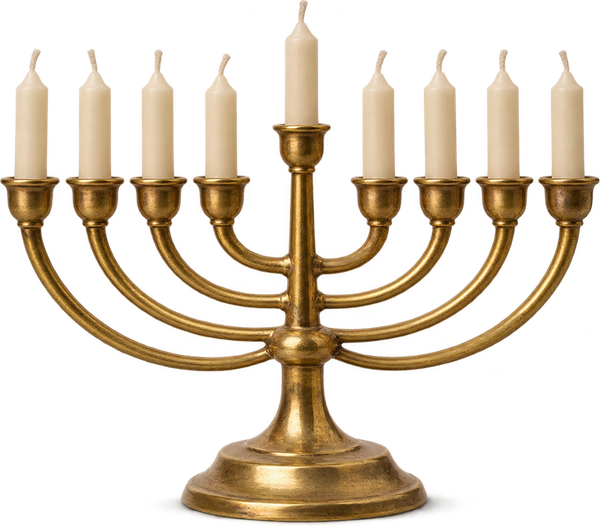
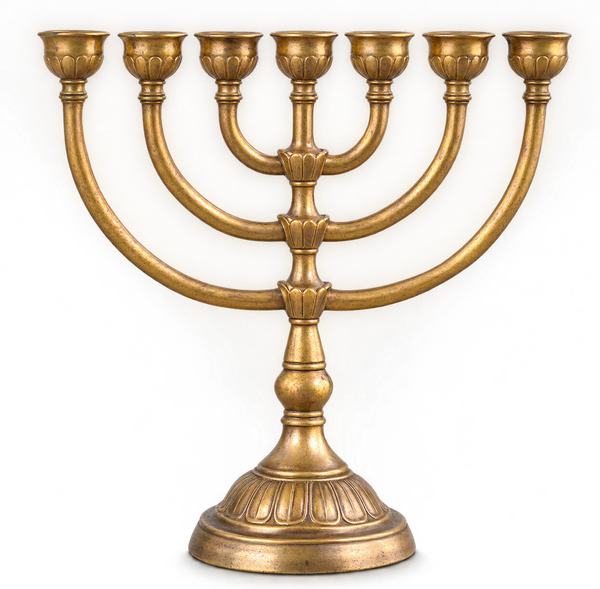
The Hanukkiah has eight lights in a row and a distinct shamash. It differs from the seven-branched Temple menorah, which may not be reproduced exactly.
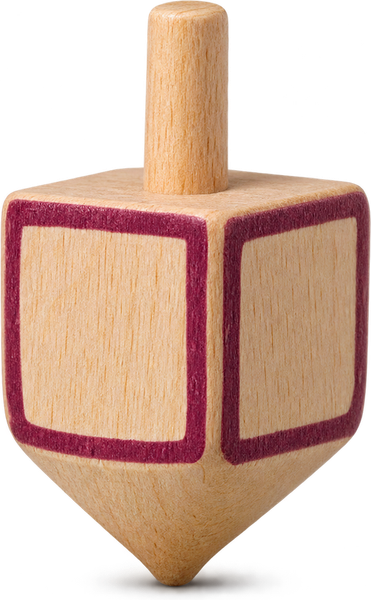
The Dreidel (Yiddish dreidel) bears the letters נ ג ה ש, read as “Nes gadol haya sham” (A great miracle happened there); in Israel the letter ש is replaced by פ – “po”, meaning “here”.
Traditional foods
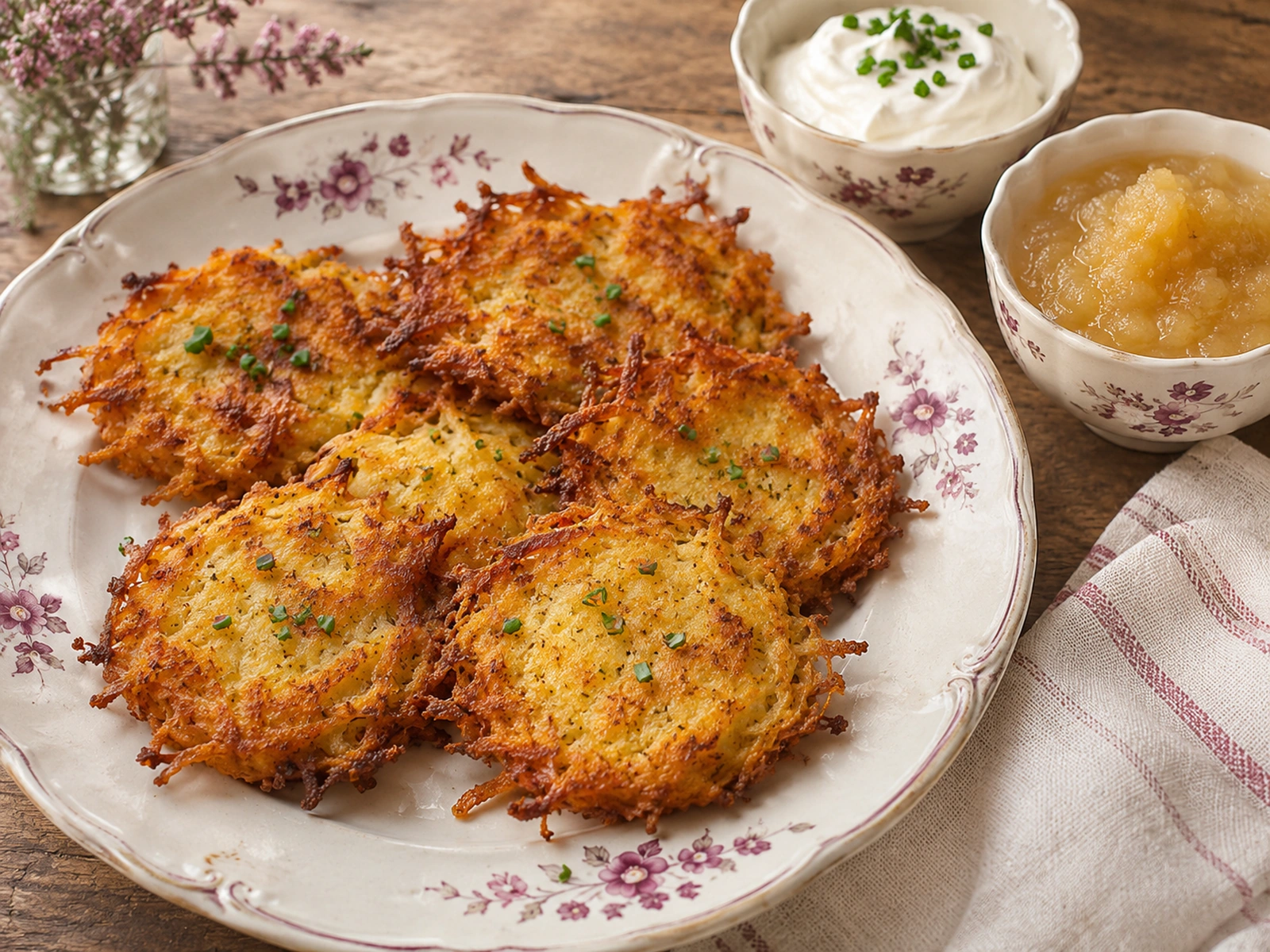
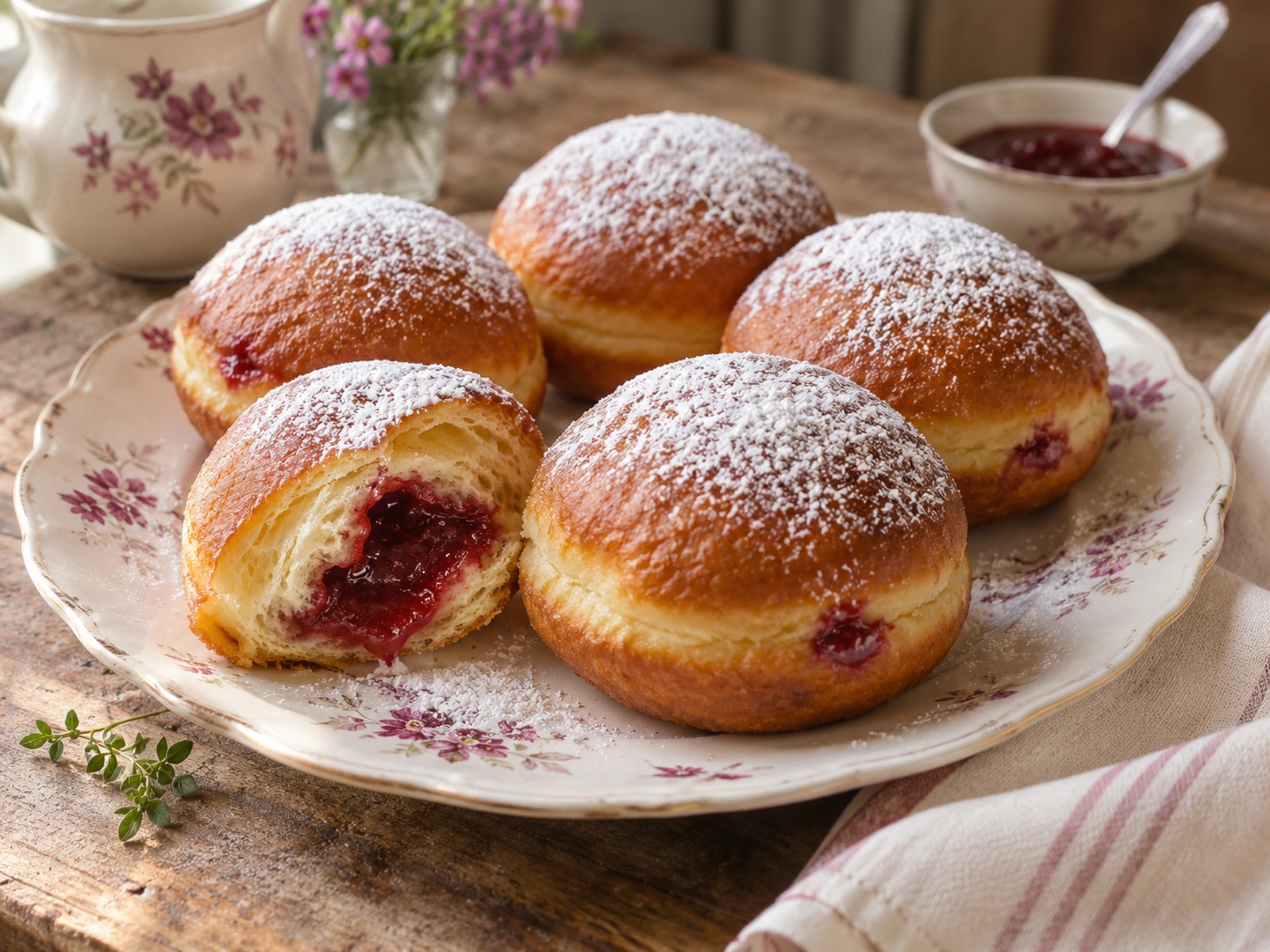
Foods fried in oil recall the miracle of the oil: Ashkenazi potato Latkes and the doughnuts called Sufganiyot, today most popular especially in Israel. Sephardi and Mizrahi communities have fried pieces of dough in syrup (e.g. bimuelos, zalabia).15,16
The Rema's gloss records the custom of eating dairy foods (cheese) on Hanukkah in memory of Judith, whose story was associated with the festival in the Middle Ages.17
Differences between communities
Yemenite and some Mizrahi communities have preserved special customs, e.g. the girls' festival Chag ha-Banot (Rosh Chodesh Tevet) in North Africa.
Orthodox, Masorti and Reform communities all light the hanukkiah; they differ mainly in details (number of hanukkiot per household, oil vs. candles). In secular Israel it is a popular family and school holiday.
In the Czech lands
For children
Each evening children can add one candle and count for themselves how many are already burning. The sevivon game is played for nuts or chocolate coins: nun – nothing, gimel – everything, he – half, shin – put one in.
For small children a candle hanukkiah on a non-flammable base with adult supervision is safer; oil lamps are better suited to older children.
FAQ
Why does Hanukkah last eight days?
The books of Maccabees speak of an eight-day celebration of rededication (2 Maccabees compares it to Sukkot). The Talmud explains it by the miracle of the oil, which burned for eight days.
Is Hanukkah a biblical festival?
No. The events took place after the Hebrew Bible was closed; the festival is rabbinic (de-rabbanan). The books of Maccabees are not in the Hebrew canon.
Is work permitted on Hanukkah?
Yes, Hanukkah is not a day of rest from work. There is a custom that women do not work while the lights are burning.
Do you light from left to right or right to left?
According to widespread practice the new light is added on the left, and lighting proceeds from the newest (leftmost) towards the right. Details vary by custom.⁂ To verify
Is Hanukkah “Jewish Christmas”?
No. It is a separate festival with its own history; gifts are more of a modern custom influenced by the surrounding culture.
Sources
Primary sources
- 1I Maccabees, 1–4
- 2I Maccabees, 4:36–59
- 3II Maccabees, 10:1–8
- 4Josephus, Antiquities of the Jews, 12.7.7
- 5Babylonian Talmud, Shabbat, 21b text ↗
- 6Megillat Taanit – 25. kislev mezi dny, kdy se nepostí
- 7Shulchan Arukh, Orach Chayim, 671:2 text ↗
- 8Shulchan Arukh, Orach Chayim, 672; 679
- 9Shulchan Arukh, Orach Chayim, 673:1 text ↗
- 10Siddur
- 11Numbers, 7 text ↗
- 12Shulchan Arukh, Orach Chayim, 670:1 text ↗
- 13Babylonian Talmud, Shabbat, 23a text ↗
- 14Shulchan Arukh, Orach Chayim, 676:1 text ↗
- 17Shulchan Arukh, Orach Chayim, 670:2 text ↗
- 19II Maccabees, 10:6
- 20Babylonian Talmud, Shabbat, 21b–23b text ↗
- 21Shulchan Arukh, Orach Chayim, 670–684 text ↗
- 22Mishneh Torah