Mazeltov.cz explains; it does not rule. Kashrut practice varies by community, movement and family. For a specific situation, ask the rabbi of your community. The texts in this section are editorial drafts awaiting expert review.
What is parve
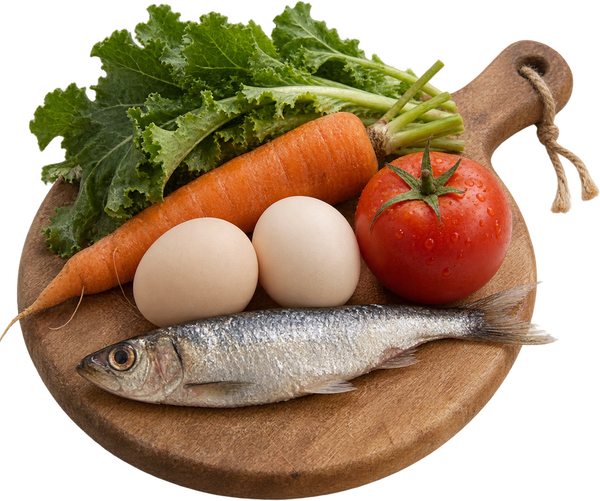
The word parve (also pareve) comes from Yiddish; in Israeli Hebrew it is spelled פרווה. Parve covers everything that does not come from mammals or poultry and contains no milk: fruit, vegetables, grains, legumes, nuts, mushrooms, oil, sugar, salt – and also eggs and fish.1
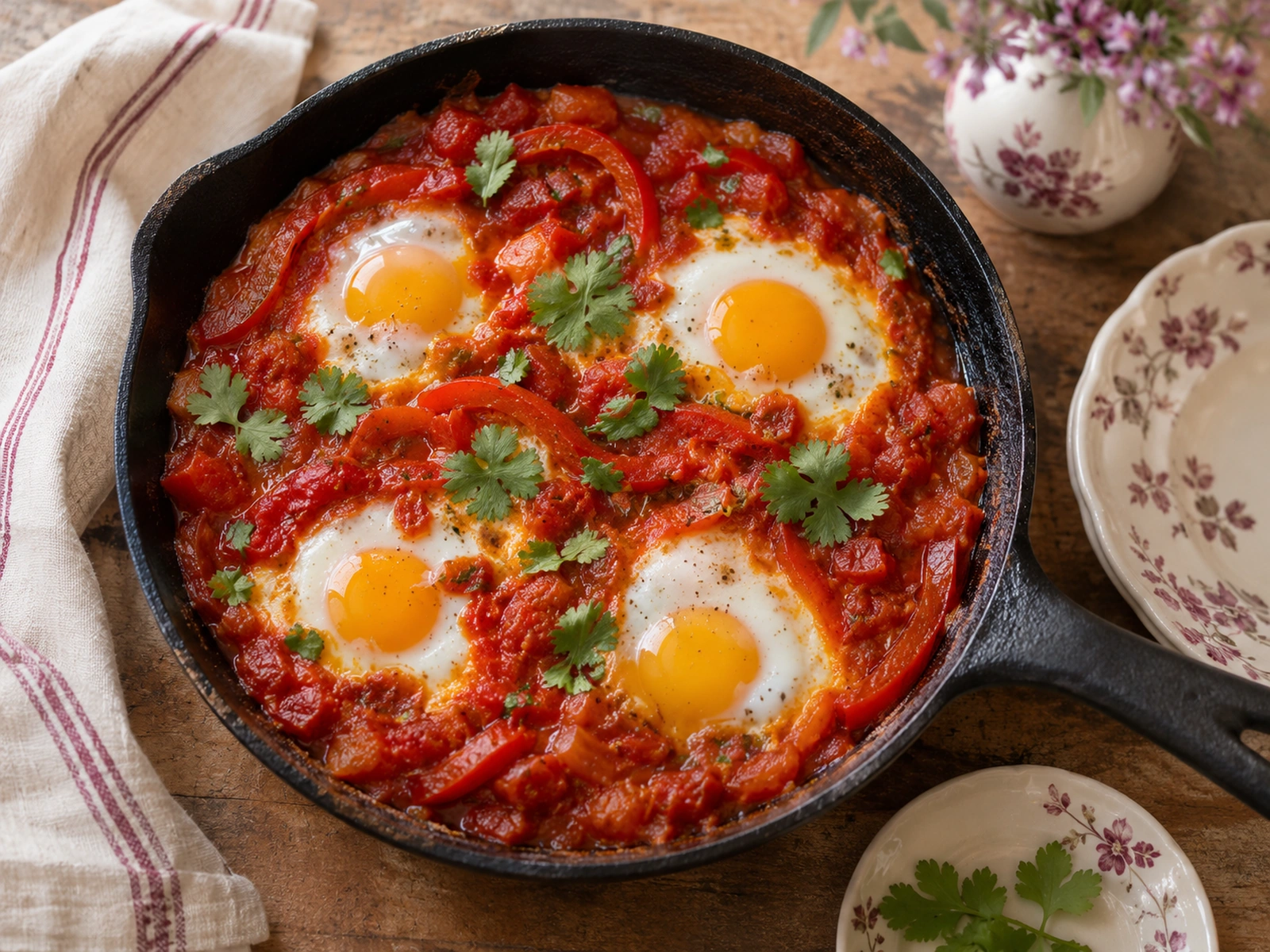
Eggs of permitted birds are parve. When cracking them, traditional practice checks for a blood spot; according to the Rema, the custom is to discard such an egg entirely. This is why eggs are often cracked one at a time into a glass.2
Honey is permitted and parve even though the bee itself is not: according to the Talmudic explanation, honey is not a product of the bee’s body but nectar that the bee merely processes.
Fish are parve if they belong to a permitted species – with fins and scales. They require no ritual slaughter, and the prohibition of blood does not apply to them as it does to meat. For which species are permitted, see Permitted Animals.3,4
When parve stops being parve
A neutral food cooked in a clean meat pot (rice or vegetables, say) remains, according to the Shulchan Arukh, neutral enough to be eaten even with dairy: the taste passed only indirectly, “from the pot into the food” (nat bar nat). The Rema and Ashkenazi practice are stricter: such a food is not eaten with dairy in the first place, but if this has already happened, it is not forbidden.5,6
Sharp foods (davar charif, such as onion, garlic, horseradish) cut with a meat knife absorb the taste of the knife according to halakhah and are considered meat. This is why a kosher kitchen uses a dairy or neutral knife for vegetables going into dairy dishes.7
According to the Shulchan Arukh, bread should not be baked with milk or meat fat, since it might mistakenly be eaten with the opposite kind of food; exceptions are a small quantity or a distinctly different shape. This is why ordinary bread in kosher bakeries is generally parve.8
A dish with a meat or dairy component, such as vegetable soup made with chicken stock or pastry with butter, is no longer parve. Products therefore indicate their status (see below).
Fish and meat
The Talmud states that fish roasted together with meat should not be eaten because it is “dangerous” (sakanah) – according to the Talmudic text, because of a skin disease. This is therefore not a kashrut prohibition in the narrow sense but a health concern, which halakhah takes very seriously.9
The Shulchan Arukh accordingly rules that fish and meat are not eaten together. Between a fish course and a meat course, traditional practice is to eat a piece of bread and have a drink, or rinse the mouth; many also change cutlery and plates.10,11
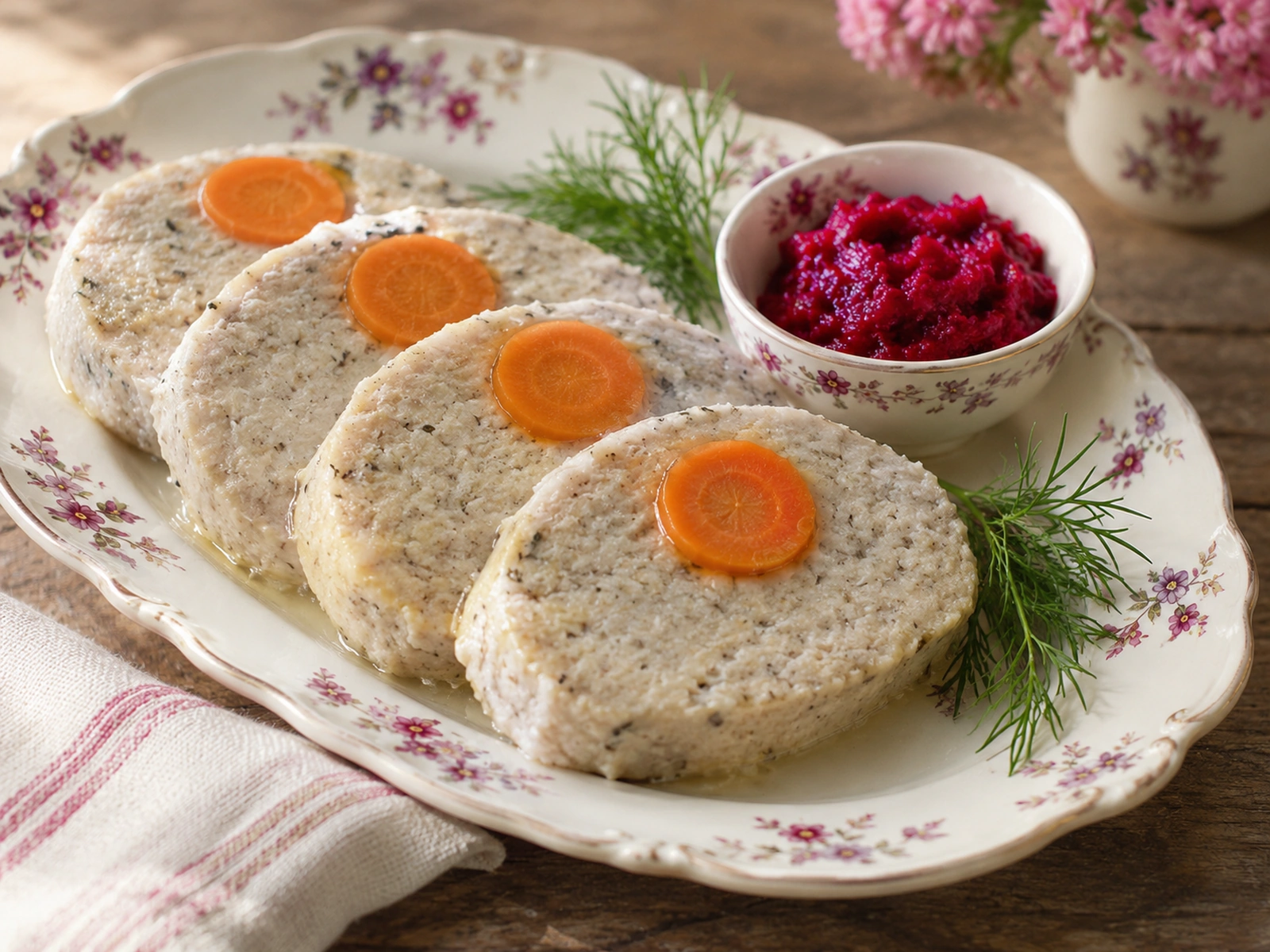
This can be seen at a Shabbat dinner: after a starter of Gefilte fish, the chicken soup is served only after the plates are changed and a piece of challah is eaten. Unlike with meat and milk, there is no waiting between fish and meat.
In Orthodox practice the rule is kept even though modern medicine does not confirm the claimed danger, following the principle that threats to health are treated more strictly than prohibitions. Some non-Orthodox writers, by contrast, consider it outdated.
Fish and dairy
Fish do not fall under the prohibition of meat and milk; the Mishnah explicitly exempts them. From the standpoint of halakhah, fish may therefore be cooked in butter or served with cream.1
In Ashkenazi cuisine the combination of fish and dairy is common: herring in cream, smoked salmon with cream cheese, fish cooked in butter.
Some Sephardi and Mizrahi communities do not combine fish with milk; this custom rests on a remark by Joseph Karo in his commentary Beit Yosef. In some places only milk is avoided, not butter or cheese. Those who come from such a tradition follow their family custom.
“Parve” labelling on products
Certified products carry, next to the certifier’s symbol (hechsher), an indication of category: parve (pareve, פרווה), dairy (often “D” or “dairy”, in Hebrew חלבי) or meat (“M”, “meat”, בשרי). Some certifiers separately mark products made on dairy equipment that contain no milk themselves (e.g. “DE”).
“Parve” does not mean vegan: a parve product may contain eggs, honey or fish (such as anchovies in a sauce). Some certifiers therefore mark a fish ingredient separately, which matters because of the prohibition of fish with meat.
The ingredient list on the package is not enough on its own: the production line, a flavouring or an emulsifier may be dairy or meat. This is why Orthodox practice relies on certification; see Certification and Hechsher.
Plant-based “meat” and “cheese”
Plant-based milks, cheeses and “meat” made from legumes or grains are parve if produced without animal ingredients on neutral equipment. They make possible, for example, a vegetarian “cheeseburger” or a cream sauce made with plant cream to accompany meat.
Such dishes raise the question of mar’it ayin (the impression of a real mixture of meat and milk). Many contemporary authorities allow them, given how common and clearly labelled substitutes are today; some recommend keeping the package on the table. For more, see Meat and Milk.
Rabbinic authorities still assess the status of laboratory-grown (cultivated) meat in different ways – whether it is meat, parve, or permitted at all – and there is no single view.
FAQ
Are eggs meat or dairy?
Neither: eggs of permitted birds are parve and may be eaten with both meat and dairy. Traditional practice checks them for a blood spot.⁂ To verify
May I eat fish with meat?
According to the Shulchan Arukh, not in the same dish: fish and meat are served as separate courses, between which one usually eats a piece of bread, has a drink and changes plates. No waiting is required.
Can fish be cooked in butter or served with cream?
From the standpoint of halakhah, yes, and in Ashkenazi cuisine it is common. Some Sephardi and Mizrahi communities, however, do not combine fish with milk according to their custom.⁂ To verify
Is “parve” the same as vegan?
No. Parve only means “neither meat nor dairy”; a product may contain eggs, honey or fish.
If I cook rice in a meat pot, is the rice meat?
According to the Shulchan Arukh it may be eaten even with dairy if the pot was clean; Ashkenazi practice following the Rema does not eat it with dairy in the first place. In doubtful cases one asks a rabbi.⁂ To verify
Sources
Primary sources
- 1Mishnah Chullin, 8:1 text ↗
- 2Shulchan Arukh, Yoreh De’ah, 66:3 – glosa Rema text ↗
- 3Leviticus, 11:9–12 text ↗
- 4Deuteronomy, 14:9–10 text ↗
- 5Babylonian Talmud, Chullin, 111b text ↗
- 6Shulchan Arukh, Yoreh De’ah, 95 text ↗
- 7Shulchan Arukh, Yoreh De’ah, 96 text ↗
- 8Shulchan Arukh, Yoreh De’ah, 97:1 text ↗
- 9Babylonian Talmud, Pesachim, 76b text ↗
- 10Shulchan Arukh, Yoreh De’ah, 116:2 text ↗
- 11Shulchan Arukh, Orach Chayim, 173:2 text ↗
- 12Shulchan Arukh, Yoreh De’ah, 95–97 text ↗
- 13Shulchan Arukh, Yoreh De’ah, 116 text ↗