Mazeltov.cz explains; it does not rule. Kashrut practice varies by community, movement and family. For a specific situation, ask the rabbi of your community. The texts in this section are editorial drafts awaiting expert review.
The shochet and the knife
The Torah says “you shall slaughter… as I have commanded you”; the oral tradition derives from this the exact procedure of slaughter (shechitah, שְׁחִיטָה), which the text of the Torah itself does not describe.1
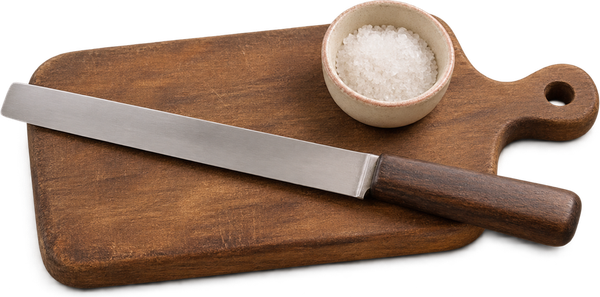
The slaughter is performed by a shochet (שׁוֹחֵט), a pious, trained specialist with a certificate (kabbalah). With a single smooth stroke of a very sharp knife free of nicks, he severs the trachea and the esophagus of a mammal; for a bird one of them suffices. The Mishnah sets how much of the “signs” (simanim) must be cut.2,3
The Talmud names five faults that invalidate the slaughter: pausing during the cut (shehiyah), pressing with the knife (derasah), burying the knife under the skin (chaladah), cutting outside the prescribed area (hagramah) and tearing out the organs (ikkur). The shochet therefore checks the edge of the knife (chalaf, חֲלָף) before and after each slaughter.4
Traditional interpretations stress that a swift cut with a sharp knife is meant to cause the animal as little suffering as possible; this is an interpretation, however, not the halakhic reason for shechitah. Whether modern shechitah achieves this aim is a matter of public and scientific debate.
Bedikah: lung inspection, glatt
After slaughter, the animal is checked for a fatal defect (see treifah below). The most important step is the inspection of the lungs (bedikah, בְּדִיקָה) in cattle and other mammals: the shochet or an inspector (bodek) looks for adhesions (sirchot) and damage.5
Meat from lungs without any adhesions is called chalak (חָלָק, “smooth”), in Yiddish glatt. According to the Shulchan Arukh (Sephardi practice following the Beit Yosef), only such meat is eaten. According to the Rema (Ashkenazi practice), certain adhesions may under certain conditions be removed and the animal declared kosher; many Ashkenazi communities today nonetheless require glatt.5
The word “glatt” is now often used loosely to mean “strictly kosher”, even for poultry or non-meat products. In its proper sense it refers only to the lungs of mammals.
Treifah and nevelah
Nevelah (נְבֵלָה) is an animal that died or was killed other than by valid shechitah. Treifah (טְרֵפָה) is an animal with a fatal defect or injury, even if it was properly slaughtered. The Torah forbids both.6,7
The Mishnah lists the kinds of defects that make an animal treifah (e.g. perforation of certain organs). In colloquial speech the word treif has spread to mean anything non-kosher, including pork or seafood.8
The prohibition of blood, salting and liver
The prohibition of eating blood is repeatedly stressed in the Torah and justified by the statement that “the blood is the life”. It applies to mammals and birds, not to fish.9,10,11
Blood is removed from meat by salting (melichah, מְלִיחָה): the meat is soaked in water (usually for about half an hour), salted with coarse salt, left to drain (usually for about an hour) and rinsed thoroughly. The Shulchan Arukh describes this procedure in detail; it should be done within three days of slaughter, otherwise the meat may only be broiled.12
Liver contains so much blood that salting is not enough: it is koshered by broiling over an open flame (cut open and salted), and only then may it be cooked further.13
Today kosher meat is almost always sold already salted and prepared by the butcher or slaughterhouse; salting at home is rare. Liver is often sold either already broiled or with a note that it must be broiled at home.
Chelev, gid ha-nasheh and nikkur
The Torah forbids certain suet (chelev, חֵלֶב) of cattle, sheep and goats, namely the fat that was offered on the altar in the Temple; ordinary fat marbled through the meat (shuman) is not forbidden. The sciatic nerve (gid ha-nasheh, גִּיד הַנָּשֶׁה) is also forbidden, in memory of Jacob's struggle with the angel.14,15,16
Their removal is called nikkur (נִקּוּר), in Yiddish traboring. In the forequarter it is relatively simple; in the hindquarter (where the sciatic nerve and much of the chelev are located) it is laborious and requires a specially trained expert.
For this reason, in the Ashkenazi diaspora the hindquarter of cattle is usually not sold as kosher and goes to the general market; kosher meat thus consists mainly of forequarter cuts. In Israel and in some Sephardi and Mizrahi communities, nikkur of the hindquarter is performed and these cuts are eaten.
Practice today
In practice, meat is bought from a certified butcher or with a hechsher that vouches for the whole chain: shechitah, bedikah, nikkur, salting and separate processing. Standards vary (e.g. glatt, the Sephardi chalak Beit Yosef); more in the article Certification and Hechsher.
Orthodox and Conservative (Masorti) Judaism require meat from shechitah. Reform Judaism treats this as a personal decision; some Jews across the movements also place emphasis on how animals are raised and treated (“ethical kashrut”).
Some European states and regions ban or severely restrict slaughter without prior stunning (examples cited include Sweden, Switzerland, Denmark and the Belgian regions); Jewish communities there import kosher meat. EU law generally allows a religious exemption and leaves states room for their own rules.
FAQ
Is kosher meat more expensive, and why?
Usually yes. Shechitah, inspection, nikkur and salting are done by trained specialists, some animals are rejected at inspection, and in the diaspora the hindquarter is often not sold as kosher.
What does “glatt kosher” mean?
Originally, meat from an animal whose lungs were free of adhesions. Sephardi practice following the Shulchan Arukh eats no other meat; Ashkenazi practice following the Rema does under certain conditions. Colloquially the term is also used to mean “strictly kosher”.⁂ To verify
Do I still have to salt kosher meat at home?
Usually not: meat from a kosher butcher is as a rule already salted and rinsed. The exception tends to be liver, which is koshered by broiling over a flame. If you are unsure, ask the butcher or a rabbi.
Why is blood forbidden when red juice is visible in a steak?
The red juice in salted meat is mostly myoglobin and water, not the blood that halakhah removes by salting. After proper melichah, the meat is considered free of blood according to halakhah.⁂ To verify
Sources
Primary sources
- 1Deuteronomy, 12:21 text ↗
- 2Mishnah Chullin, 2:1 text ↗
- 3Shulchan Arukh, Yoreh De’ah, 21 text ↗
- 4Babylonian Talmud, Chullin, 9a text ↗
- 5Shulchan Arukh, Yoreh De’ah, 39 text ↗
- 6Exodus, 22:30 text ↗
- 7Deuteronomy, 14:21 text ↗
- 8Mishnah Chullin, 3:1 text ↗
- 9Genesis, 9:4 text ↗
- 10Leviticus, 17:10–14 text ↗
- 11Deuteronomy, 12:23 text ↗
- 12Shulchan Arukh, Yoreh De’ah, 69 text ↗
- 13Shulchan Arukh, Yoreh De’ah, 73 text ↗
- 14Leviticus, 7:23–25 text ↗
- 15Genesis, 32:33 text ↗
- 16Mishnah Chullin, 7:1 text ↗
- 17Deuteronomy, 12:20–25 text ↗
- 18Mishnah Chullin
- 19Babylonian Talmud, Chullin
- 20Shulchan Arukh, Yoreh De’ah
- 21Mishneh Torah, Hilchot šchita