Minor holidays
Tu BiShvatט״וּ בִּשְׁבָט
1 day · 15 Shevat
- History
- Halakhah
- Minhag
- Folk custom
- Modern practice
- Interpretation
- Transliteration
- Tu BiShvat
- Pronunciation
- tu bi-ŠVAT
- Duration
- 1 day
In 60 seconds
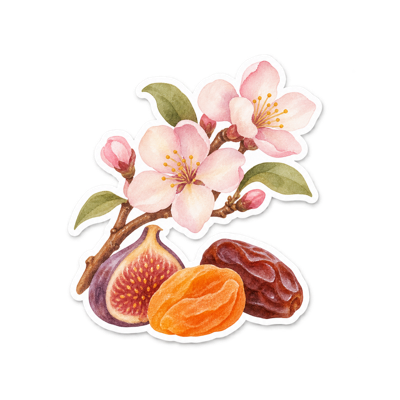
Tu BiShvat means “the 15th of Shevat”, because the Hebrew letters tet and vav have the numerical value 15. The Mishnah lists it as the “new year of trees”: the decisive date for calculating fruit tithes and the age of trees. There is no rest from work and no special service; only the penitential supplications are omitted. In the 16th–17th centuries the kabbalists of Safed developed a seder ritual with fruit and wine. The Zionist movement made it a festival of tree planting, and today many also celebrate it as an ecology day. The custom is to eat fruit, especially the seven species of the Land of Israel, and to taste a new fruit with the Shehecheyanu blessing. It is celebrated in winter, when the almond trees begin to blossom in Israel.
Next date
When
Begins
Friday, 22 January 2027, at sunset (16:38)
candle lighting: 16:20
Ends
Saturday, 23 January 2027, after nightfall (17:33)
1 day
Begins
Friday, 11 February 2028, at sunset (17:12)
candle lighting: 16:54
Ends
Saturday, 12 February 2028, after nightfall (18:04)
1 day
Begins
Tuesday, 30 January 2029, at sunset (16:53)
Ends
Wednesday, 31 January 2029, after nightfall (17:46)
1 day
Times for Prague · Diaspora
History and origins
The Mishnah lists four “new years”; 1 Shevat is the new year of trees according to the School of Shammai, 15 Shevat according to the School of Hillel, whose view is followed. Its significance was originally legal: it determined to which year fruit was counted for tithes and for the rules on young trees (orlah).1,2
In the 16th–17th centuries the Tu BiShvat Seder arose in kabbalistic circles, recorded in the work Pri Etz Hadar: eating fruit in stages by category, and four cups of wine ranging from white to red.3
From the late 19th century teachers in the Jewish settlements in Palestine celebrated Tu BiShvat by planting trees; the Jewish National Fund (Keren Kayemet) turned it into a nationwide event.
Religious meaning
The festival recalls the bond with the land and refers to Deuteronomy 20:19 (“is the tree of the field a man?”), often cited in environmental ethics. The kabbalists understood eating fruit as a repair (tikkun) of the spiritual worlds.4
Core traditions
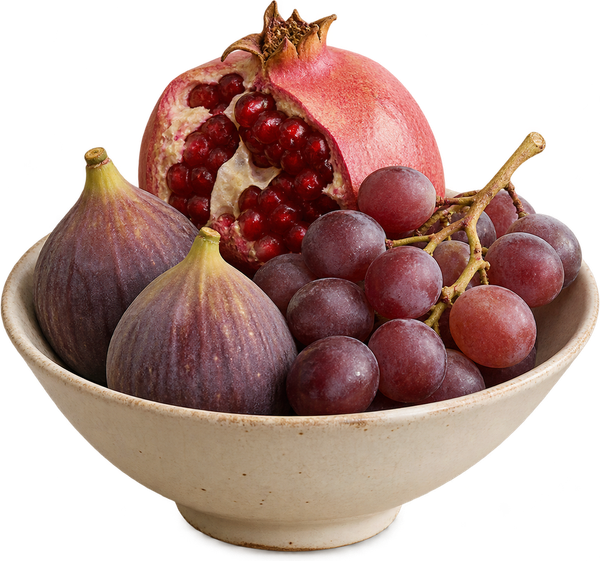
Fruit is eaten, and especially the seven species of the Land of Israel: wheat, barley, grapes, figs, pomegranates, olives and dates.5
The Tu BiShvat Seder is popular today also in liberal and secular communities, often with an environmental interpretation.

How it is observed
Tu BiShvat has no rest from work and no special prayer; according to the Shulchan Arukh, however, the penitential prayer Tachanun is not said and one does not fast.6
On tasting a fruit not yet eaten that year, Shehecheyanu is said, preceded by the blessing over fruit, borei pri ha-etz.7
Prayers and blessings
Besides the blessing over fruit and Shehecheyanu, there are psalms and texts from the kabbalistic tradition for the seder; in some communities Psalms 104 and 148 are recited.8
Symbols and objects
The blossoming almond tree (shaked), which in Israel blooms right around Tu BiShvat, and the tree sapling. The seven species are a symbol of the land.
Traditional foods
Dried fruit and nuts, especially in the diaspora, where fresh fruit from the Land of Israel was not available in winter; in Ashkenazi communities traditionally carob (bokser).
Sephardi communities celebrated Las Frutas (Frutikas) with bowls of fruit, sweets and songs.
Differences between communities
In Israel it is a day when schools and families plant trees; in the diaspora people often contribute to tree planting in Israel.
In the Czech lands
Czech Jewish communities and associations hold Tu BiShvat seders; historical evidence of celebrations in the Czech lands still needs to be verified.
For children
Children can plant a seed or a sapling, taste the seven species and draw a tree of the year.
FAQ
What does “Tu” mean?
The letters ט (9) and ו (6) add up to 15, i.e. 15 Shevat.
Is Tu BiShvat a day of rest from work?
No. It is a minor festival with no restrictions on work; only Tachanun is not said.
Why is it called the “new year of trees”?
The Mishnah calls it this for legal reasons: it determines the year for fruit tithes.
What is the Tu BiShvat Seder?
A kabbalistic ritual with fruit and four cups of wine, popular today across communities.⁂ To verify
Sources
Primary sources
- 1Mishnah Rosh Hashanah, 1:1 text ↗
- 2Babylonian Talmud, Rosh Hashanah, 14a text ↗
- 4Deuteronomy, 20:19 text ↗
- 5Deuteronomy, 8:8 text ↗
- 6Shulchan Arukh, Orach Chayim, 131:6 text ↗
- 7Siddur
- 8Psalms, 104; 148